
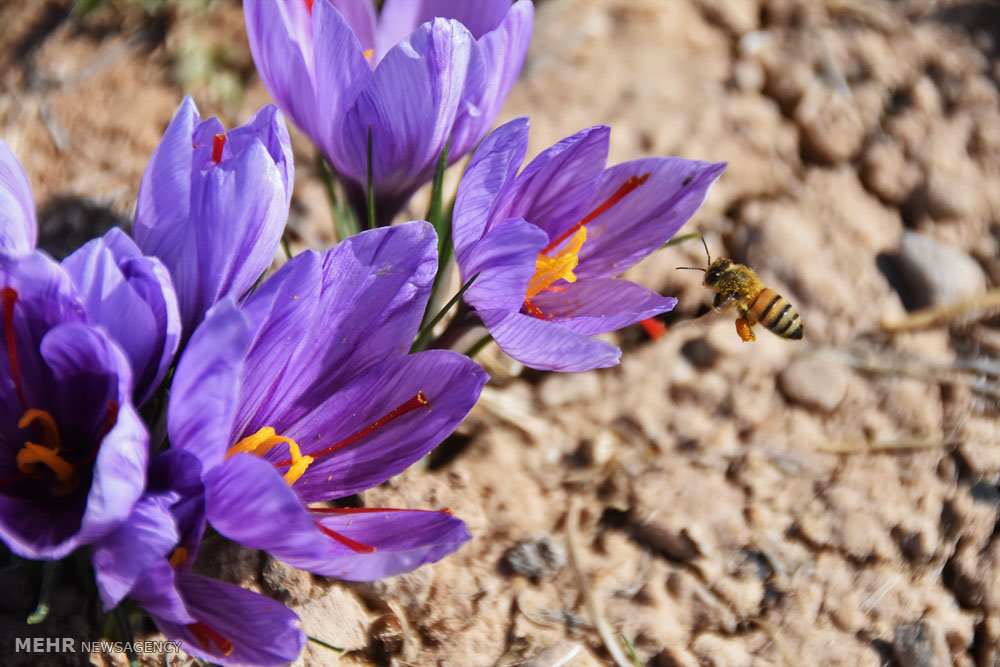
The history of saffron dates back thousands of years. This precious spice has played a significant role in the culture, economy, and cuisine of Iran and many other countries worldwide. Saffron is not only known as a highly valuable spice, but it has also been prized for its medicinal properties as well as its cultural and religious significance.
In this article, we explore the origins of saffron, its global spread, and Iran’s unique and central role in its history.
Saffron in Iran: The Primary Center of Production
Iran has long been the world’s largest producer of saffron. Favorable natural conditions, fertile soil, and a suitable climate have made the country the primary center for saffron cultivation. Historical evidence shows that in regions such as Khorasan and Fars, saffron was traditionally used as a spice, a medicinal ingredient, and a natural dye.
Cultural Significance
In Iran, saffron has held importance far beyond culinary use. It has been widely used in traditional and ceremonial practices, where its color and aroma symbolized authenticity, prosperity, and refinement. Saffron was commonly present in celebrations, weddings, and religious occasions.
The Origin and Global Spread of Saffron
Through trade expansion and cultural exchange, saffron gradually spread to other parts of the world. In Ancient Greece, Egypt, and the Roman Empire, saffron was recognized as a fragrant substance, a coloring agent, and a natural remedy.
-
Ancient Greece: Saffron was used to treat illnesses and was applied in baths and beauty rituals.
-
Ancient Egypt: It played a role in religious ceremonies and was valued as an ingredient in medicines and perfumes.
-
Europe and Asia: Through major trade routes such as the Silk Road, saffron reached India and Central Asian regions, where it gained a firm place in traditional cuisine and medicine.
The Impact of Saffron on Culture and Economy
Saffron has always been a product of high economic value and strong cultural significance. Today, Iran produces more than 90% of the world’s saffron, making it a key player in international markets.
The export of Iranian saffron to Europe, North America, and Asia provides sustainable income for farmers and contributes significantly to the national economy.
Traditional Cultivation and Harvesting Methods
Historically, saffron was produced through bulb planting and entirely manual harvesting. The drying process, stigma separation, and packaging were also carried out using traditional techniques. Despite their simplicity, these methods ensured high purity and exceptional quality.
-
Planting saffron bulbs in fertile soil
-
Caring for the soil and plants without chemical pesticides
-
Harvesting flowers early in the morning to preserve color and aroma
These practices form the foundation of today’s traditional and organic saffron farming methods.
Iran’s Position in the Modern World
Iran remains the global leader in saffron production and export. By combining traditional, sustainable farming practices with modern quality standards and organic principles, Iranian saffron has gained strong recognition and popularity in international markets.
This balance between heritage and innovation continues to enhance the value, authenticity, and global reputation of Iranian saffron.