
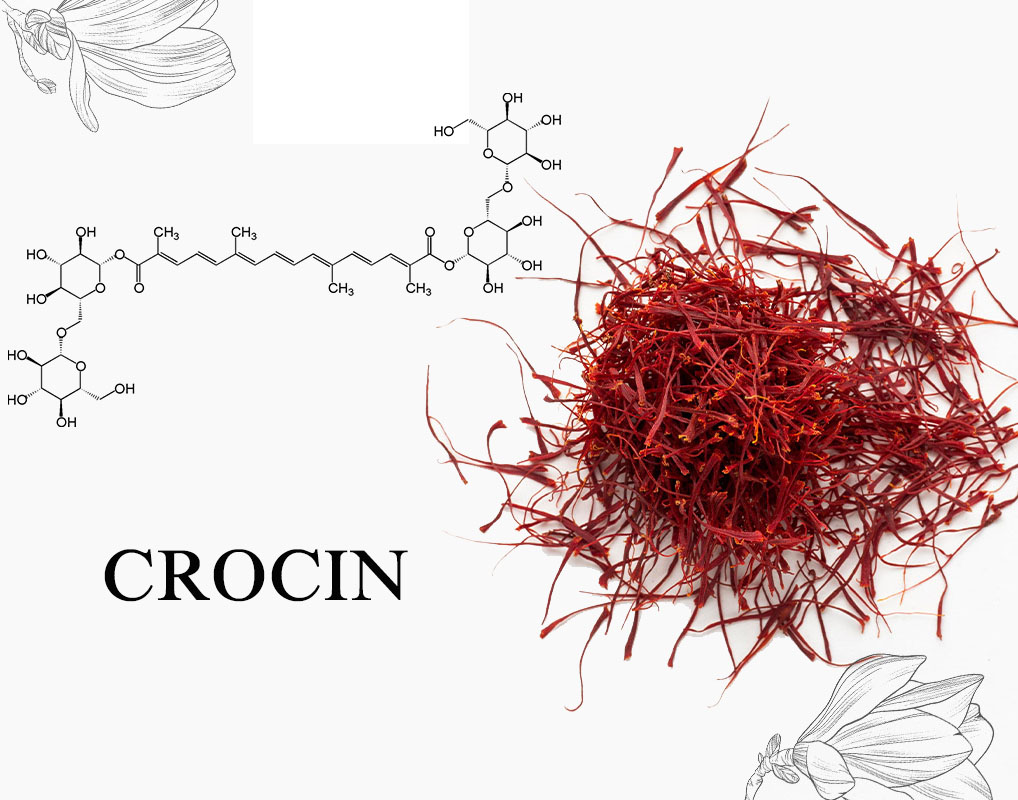
Saffron crocin is one of the most important active compounds in this valuable plant and is directly responsible for saffron’s bright, golden color. The visual quality of saffron, its coloring strength, and even its export value are highly dependent on crocin content. For this reason, a clear understanding of this compound is essential for consumers, producers, and professionals in the saffron industry.
What Is Crocin?
Crocin is a water-soluble carotenoid compound found in the stigmas of saffron. Unlike many plant pigments that are fat-soluble, crocin dissolves easily in water and produces a strong yellow–orange coloration.
Chemical Characteristics of Crocin
-
Water-soluble
-
Stable under proper storage conditions
-
Primary agent responsible for saffron’s coloring power
-
Measurable in laboratory analysis (ISO 3632 standard)
The Role of Crocin in Saffron Quality
Under international saffron standards, crocin content is one of the three main quality indicators. The higher the crocin absorbance value, the higher the saffron’s coloring strength and overall quality.
Crocin’s Impact on:
-
Appearance: Deeper red stigmas
-
Coloring strength: Stronger color with a smaller quantity
-
Price and export value: Higher crocin content commands a higher market price
Crocin in Organic Saffron
In organic saffron, the absence of chemical pesticides and synthetic fertilizers helps preserve the plant’s natural structure. As a result, crocin in organic saffron is generally more stable and purer.
Factors That Help Preserve Crocin in Organic Saffron
-
Healthy cultivation without chemical stress
-
Proper and timely flower harvesting
-
Gentle and controlled drying processes
-
Storage under standard conditions (low light and low humidity)
Therapeutic Properties of Crocin
Scientific studies indicate that crocin is not only responsible for saffron’s color but also possesses significant biological and therapeutic properties.
Key Health Benefits of Saffron Crocin
-
Powerful antioxidant: Helps neutralize free radicals
-
Supports cardiovascular health
-
Positive effects on mood and stress reduction
-
Supports proper nervous system function
Many of saffron’s recognized therapeutic effects are directly linked to the presence of crocin.
Factors That Reduce Crocin Content
-
Direct exposure to sunlight
-
Excessively high drying temperatures
-
Long-term storage in unsuitable containers
-
Adulteration or mixing with artificial additives or fake saffron
For this reason, high-quality saffron typically contains natural and stable crocin.
Difference Between High-Quality and Low-Quality Saffron Based on Crocin
| Feature | High-Quality Saffron | Low-Quality Saffron |
|---|---|---|
| Coloring strength | Very high | Weak |
| Stigma color | Deep red | Pale |
| Crocin content | High | Low |
Conclusion
Crocin is the primary indicator of saffron’s coloring strength, quality, and true value. Organic saffron with high crocin content not only delivers superior appearance and color but is also more valuable in terms of health and therapeutic benefits. Understanding this compound enables consumers to make informed and professional purchasing decisions.