

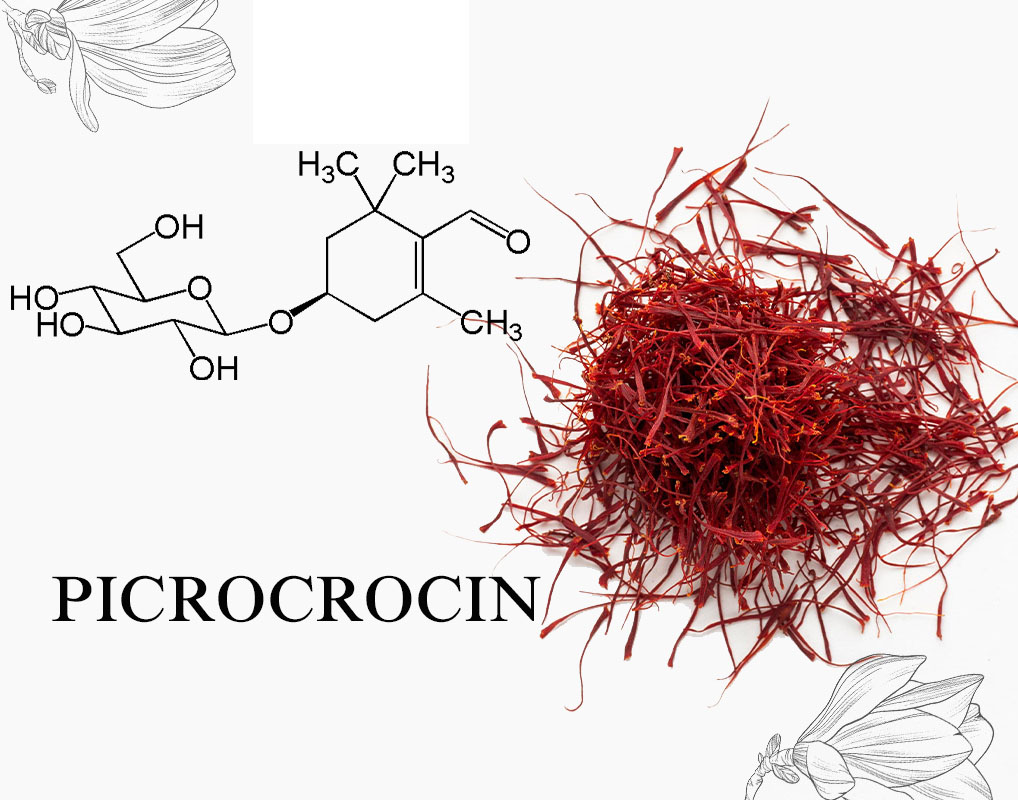
Picrocrocin is one of the key compounds found in saffron stigmas and is primarily responsible for the characteristic bitter taste of this valuable spice. The picrocrocin content of saffron not only affects flavor but is also a critical indicator of product quality and authenticity. With its various biological properties, this compound plays an essential role in defining the true value of saffron.
What Is Picrocrocin?
Picrocrocin is a bitter glycosidic compound found mainly in the stigmas of saffron. It is responsible for saffron’s natural bitterness and acts as the precursor of safranal, the aromatic compound of saffron.
During controlled heating or drying of saffron flowers, picrocrocin breaks down and forms safranal, which gives saffron its pleasant and distinctive aroma.
Chemical Characteristics of Picrocrocin
-
Water-soluble
-
Bitter glycosidic compound
-
Precursor of safranal
-
Stable under cool and dry storage conditions
The Role of Picrocrocin in Saffron Quality
Picrocrocin content is one of the three main quality parameters defined under the ISO 3632 saffron standard. A higher picrocrocin level indicates that:
-
The bitterness of saffron is natural and well-balanced
-
The saffron is fresher and of higher quality
-
The economic and export value of the product is higher
Picrocrocin and Organic Saffron
In organic saffron, preserving the natural structure of the stigmas helps maintain pure and stable picrocrocin levels. Key contributing factors include:
-
Harvesting flowers at the optimal time
-
Gentle and standardized drying methods
-
Storage in containers protected from light and moisture
-
Avoidance of chemical pesticides and synthetic fertilizers
The Effect of Picrocrocin on Flavor and Culinary Use
Picrocrocin has a direct impact on the sensory experience of saffron:
-
Mild and balanced bitterness: A significant portion of saffron’s bitterness comes from picrocrocin
-
Balance with safranal aroma: The conversion of picrocrocin into safranal creates harmony between flavor and aroma
-
Effectiveness in foods and infusions: Picrocrocin contributes to the authentic taste and identity of saffron in various dishes and herbal drinks
Therapeutic Properties of Picrocrocin
Scientific research suggests that picrocrocin offers notable biological benefits in addition to its role in flavor:
-
Helps reduce stress and anxiety
-
Exhibits strong antioxidant activity
-
Supports cardiovascular and digestive health
-
Enhances the effects of other saffron compounds such as crocin and safranal
Factors That Reduce Picrocrocin Content
-
Rapid drying or drying at excessively high temperatures
-
Direct exposure to sunlight
-
Long-term storage in unsuitable containers
-
Adulteration with artificial additives or fake saffron
Difference Between High-Quality and Low-Quality Saffron Based on Picrocrocin
| Feature | High-Quality Saffron | Low-Quality Saffron |
|---|---|---|
| Natural bitterness | Balanced and pleasant | Weak or excessive |
| Picrocrocin content | High | Low |
| Final flavor | Authentic and enjoyable | Artificial or weak |
Conclusion
Picrocrocin plays a crucial role in defining saffron’s flavor, quality, and overall value. In organic saffron, this compound is preserved with higher purity, enhancing both the taste profile and the therapeutic properties of saffron. Understanding picrocrocin enables consumers and producers alike to make informed, professional decisions when selecting high-quality saffron.