
Safranal in Saffron and Its Impact on Aroma and Product Quality
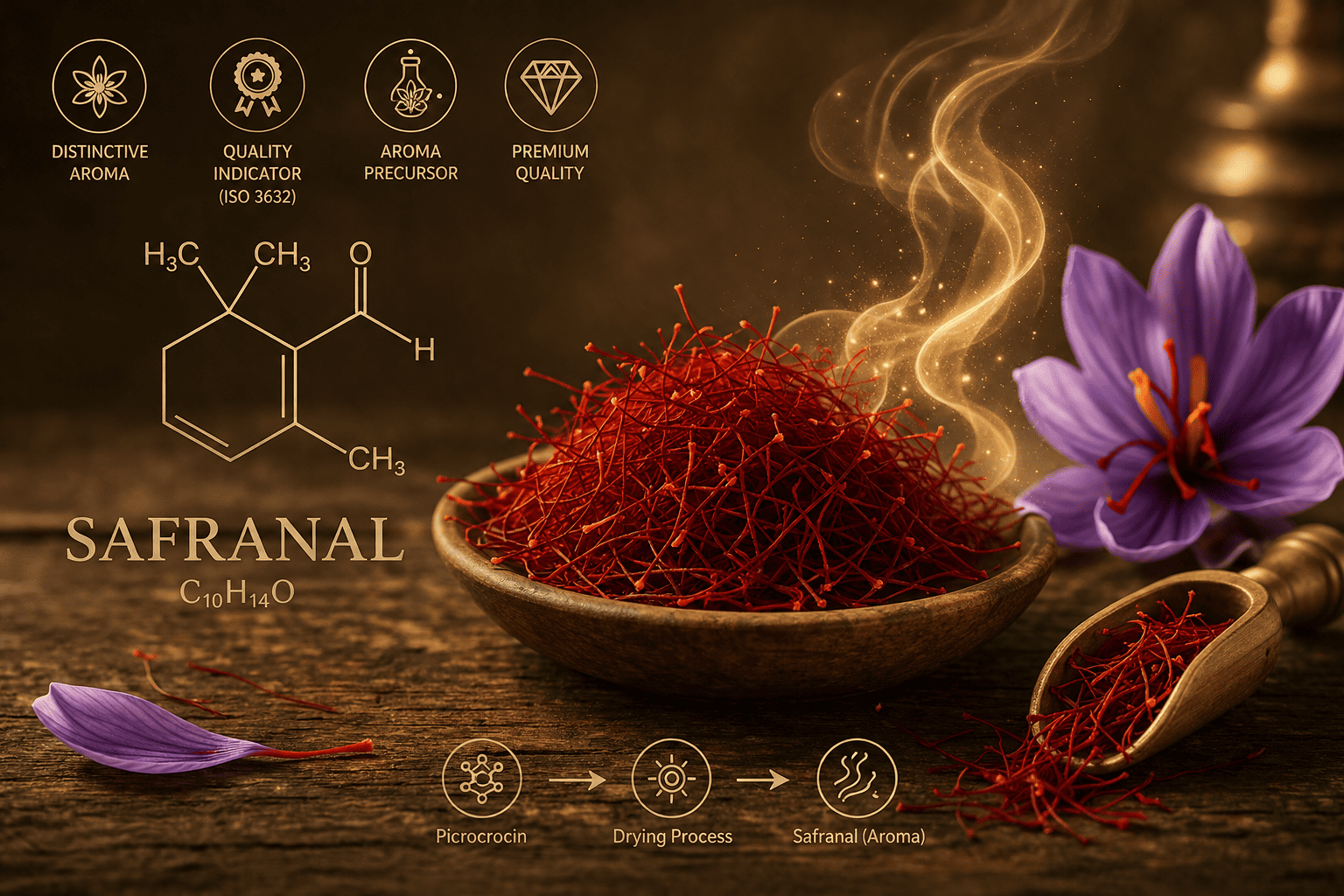
Safranal in saffron is one of the key compounds and is primarily responsible for the spice’s distinctive and pleasant aroma. During the drying process of saffron flowers, the compound picrocrocin breaks down and forms safranal. This compound not only creates saffron’s characteristic fragrance but is also associated with part of its therapeutic properties.
What Is Safranal?
Safranal is a volatile aromatic compound found in saffron stigmas. It is responsible for saffron’s unique, appealing scent and is considered one of the quality indicators defined under the ISO 3632 standard for saffron evaluation.
Chemical Characteristics of Safranal
- Volatile aromatic compound
- Fat-soluble and slightly soluble in water
- Produced through the breakdown of picrocrocin during drying
- Stable under proper storage conditions
The Role of Safranal in Saffron Quality
Safranal content is a key factor in determining saffron’s aromatic strength and overall quality. The higher the safranal level:
- The aroma of saffron becomes stronger and more pleasant
- The consumer experience in cooking and herbal infusions improves
- The economic and export value of saffron increases
Safranal and Organic Saffron
In organic saffron, natural cultivation, harvesting, and drying practices help preserve pure and natural safranal. Important factors include:
- Harvesting flowers early in the morning
- Gentle and controlled drying methods
- Storage in dark, dry containers
- Avoidance of chemical pesticides and synthetic fertilizers
The Effect of Safranal on Flavor and Aroma
Safranal enhances saffron by:
- Providing a pleasant and distinctive aroma
- Creating balance between bitterness and fragrance alongside picrocrocin
- Improving culinary and infusion experiences
This aromatic compound allows even small amounts of saffron to impart a rich flavor and aroma to foods and beverages.
Therapeutic Properties of Safranal
Scientific studies indicate that safranal offers notable health benefits in addition to its aromatic role:
- Helps reduce stress and anxiety
- Exhibits antioxidant and cell-protective effects
- Supports memory and concentration
- Contributes to nervous system balance and emotional well-being
Together with crocin and picrocrocin, safranal plays a significant role in the therapeutic profile of saffron.
Factors That Reduce Safranal Content
- High-temperature or uncontrolled drying
- Direct exposure to sunlight
- Long-term storage under unsuitable conditions
- Adulteration with fake or low-quality saffron
Preserving safranal in organic saffron is a strong indicator of superior product quality.
Difference Between High-Quality and Low-Quality Saffron Based on Safranal
| Feature | High-Quality Saffron | Low-Quality Saffron |
|---|---|---|
| Aroma | Strong and pleasant | Weak or unpleasant |
| Safranal content | High | Low |
| Consumer experience | Authentic and enjoyable | Weak or artificial |
Conclusion
Safranal is a key compound that defines saffron’s aroma, quality, and overall sensory experience. Organic saffron with natural and stable safranal not only delivers a pleasant fragrance but also enhances saffron’s therapeutic value, reflecting the product’s true quality. Understanding safranal enables both consumers and producers to make informed and professional choices.
How to Recognize Safranal in Saffron by Smell
Authentic saffron with proper safranal levels has a sharp, distinctive aroma that’s immediately noticeable upon opening the package. Low-quality or old saffron typically loses this strong aroma or lacks it entirely, signaling reduced safranal content and declining quality.
Factors Affecting Safranal Levels in Saffron
Safranal in saffron depends on drying method, processing temperature, and storage conditions. Fast drying at controlled temperatures is the best way to preserve safranal and saffron’s natural aroma. Improper storage, exposure to moisture, or light can gradually break down safranal and diminish the product’s fragrance over time.
The Importance of Safranal in Commercial Saffron Grading
Under international saffron grading standards (such as ISO 3632), safranal level is one of three key quality indicators alongside crocin and picrocrocin. Saffron with higher safranal content is classified in premium quality tiers and commands greater market value.
Zartar Sorkh Eurasia follows strict standardized drying methods to ensure that safranal in saffron is preserved, delivering the authentic, powerful aroma consumers expect.