
Organic Saffron Cultivation: Complete Process and Key Quality Considerations
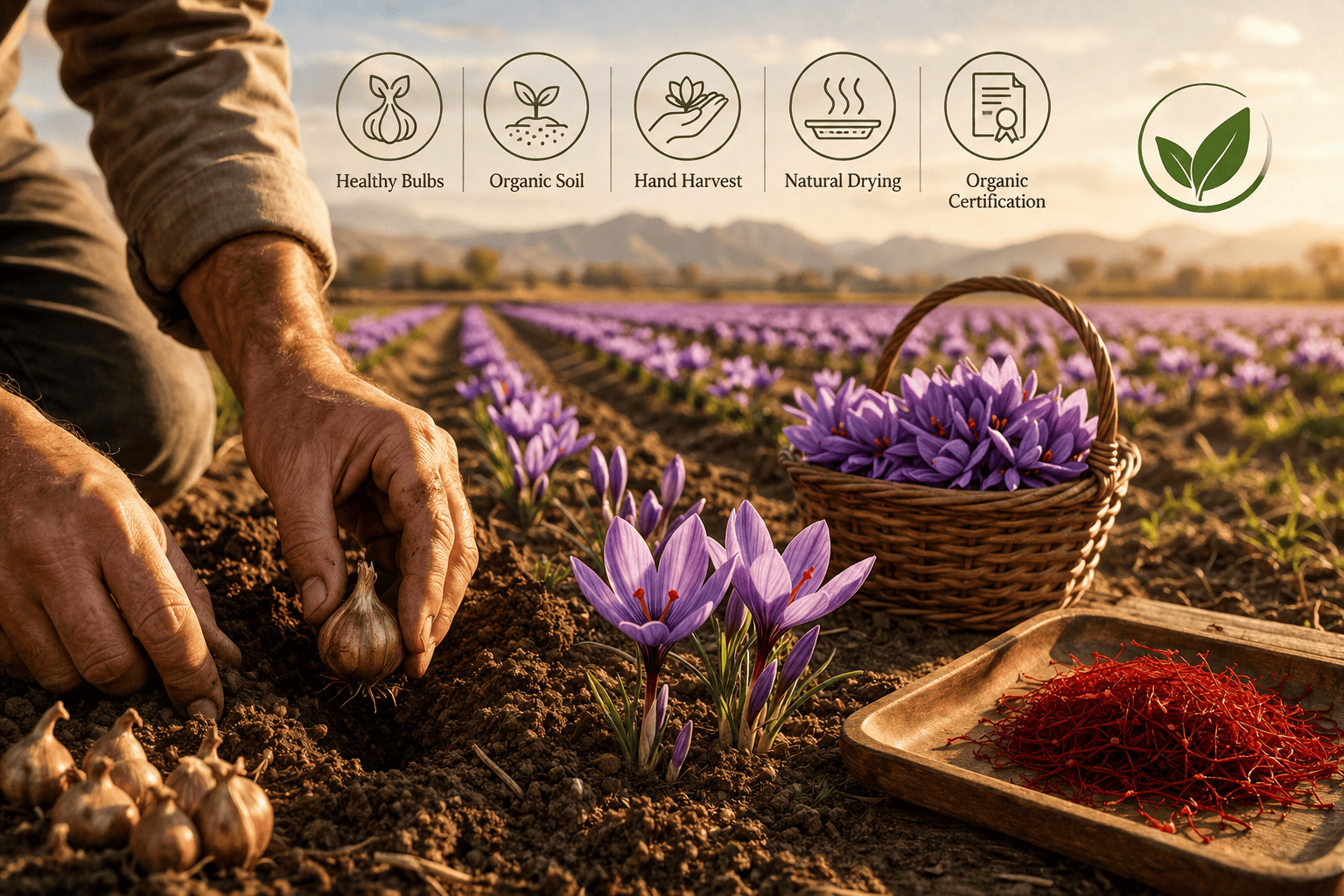
Organic saffron cultivation is a sensitive and highly precise process that directly determines the quality and purity of the final product. This method is carried out without the use of chemical pesticides or synthetic fertilizers, and strict adherence to organic standards—from bulb selection to flower harvesting—is essential.
In this article, we review the complete stages of organic saffron cultivation and the key practices required to maintain premium quality.
Selecting Healthy Bulbs and Land Preparation
Choosing healthy saffron bulbs is the first and most critical step in organic cultivation. Large, disease-free bulbs ensure stronger growth and optimal flowering.
Soil Preparation
The soil must be fertile, well-drained, and rich in organic matter. In organic farming, natural fertilizers such as compost and green manure replace chemical fertilizers. Proper plowing and the removal of weeds are also essential to support healthy plant development.
Planting Saffron Bulbs
Saffron bulbs are typically planted at a depth of 10–15 cm with appropriate spacing to allow sufficient room for root development and stigma formation.
Key planting considerations include:
- Each row should be well-aligned and spaced according to standard cultivation practices
- The soil should be moist and firm to prevent bulb displacement
Crop Care and Maintenance
Proper maintenance is essential to protect plant health and preserve organic integrity:
- Regular irrigation, especially during dry periods
- Weed control using mechanical and natural methods
- Pest prevention through natural and biological solutions
Flowering and Harvesting
After approximately 2 to 3 years, saffron flowers begin to appear. Harvesting must be done carefully and entirely by hand to preserve the quality and purity of the stigmas.
Critical Harvesting Steps
- Picking flowers early in the morning to preserve aroma and color
- Separating the stigmas from the rest of the flower
- Drying the stigmas under controlled conditions and at appropriate temperatures
Advantages of Organic Saffron Cultivation
Organic cultivation offers several important benefits:
- Pure and safe product: Free from chemical residue
- Preservation of natural properties: Aroma, color, and flavor remain intact
- Environmental sustainability: Protection of soil health and biodiversity
Practical Recommendations for Farmers
To achieve high-quality organic saffron, farmers should:
- Use certified organic saffron bulbs
- Follow correct planting depth and spacing guidelines
- Manage irrigation and soil using sustainable practices
- Harvest carefully and dry stigmas using proper techniques
By following these principles, organic saffron cultivation can produce a premium product that meets international quality standards while supporting environmental responsibility and long-term agricultural sustainability.
Common Challenges in Organic Saffron Cultivation
Farmers who adopt organic saffron cultivation often face several practical challenges:
- Pest Control Without Chemicals: Requires specialized knowledge of biological and natural pest management techniques.
- Time-Intensive Process: Organic saffron cultivation demands more time and precision than conventional methods.
- Skilled Labor Requirements: Hand-harvesting flowers accurately requires trained workers.
Despite these challenges, the added value of the final product and growing demand in export markets make this investment worthwhile for many farmers.
How Organic Saffron Cultivation Differs from Traditional Methods
Contrary to popular belief, organic saffron cultivation is not the same as traditional saffron farming. In traditional methods, limited use of chemical fertilizers to boost yield is common, whereas organic saffron cultivation prohibits any chemical substances entirely, requiring the full process to meet international organic certification standards. While this reduces yield slightly, it significantly increases the quality, purity, and market value of the final product.
The Role of Organic Certification
To export and sell saffron under an organic label, farmers must obtain valid certification from regulatory bodies. This certification assures consumers that the product was genuinely grown through organic saffron cultivation practices and is free of any chemical residue.
Summary: The Value of Organic Saffron Cultivation
Organic saffron cultivation, despite requiring more precision and patience, produces a higher-quality product with greater economic value. Farmers who properly follow this method’s principles can produce saffron that is highly competitive both for health-conscious consumers and export markets.