
Organic Green Cumin: A Complete Guide to Cultivation, Care, and Harvesting in Iran
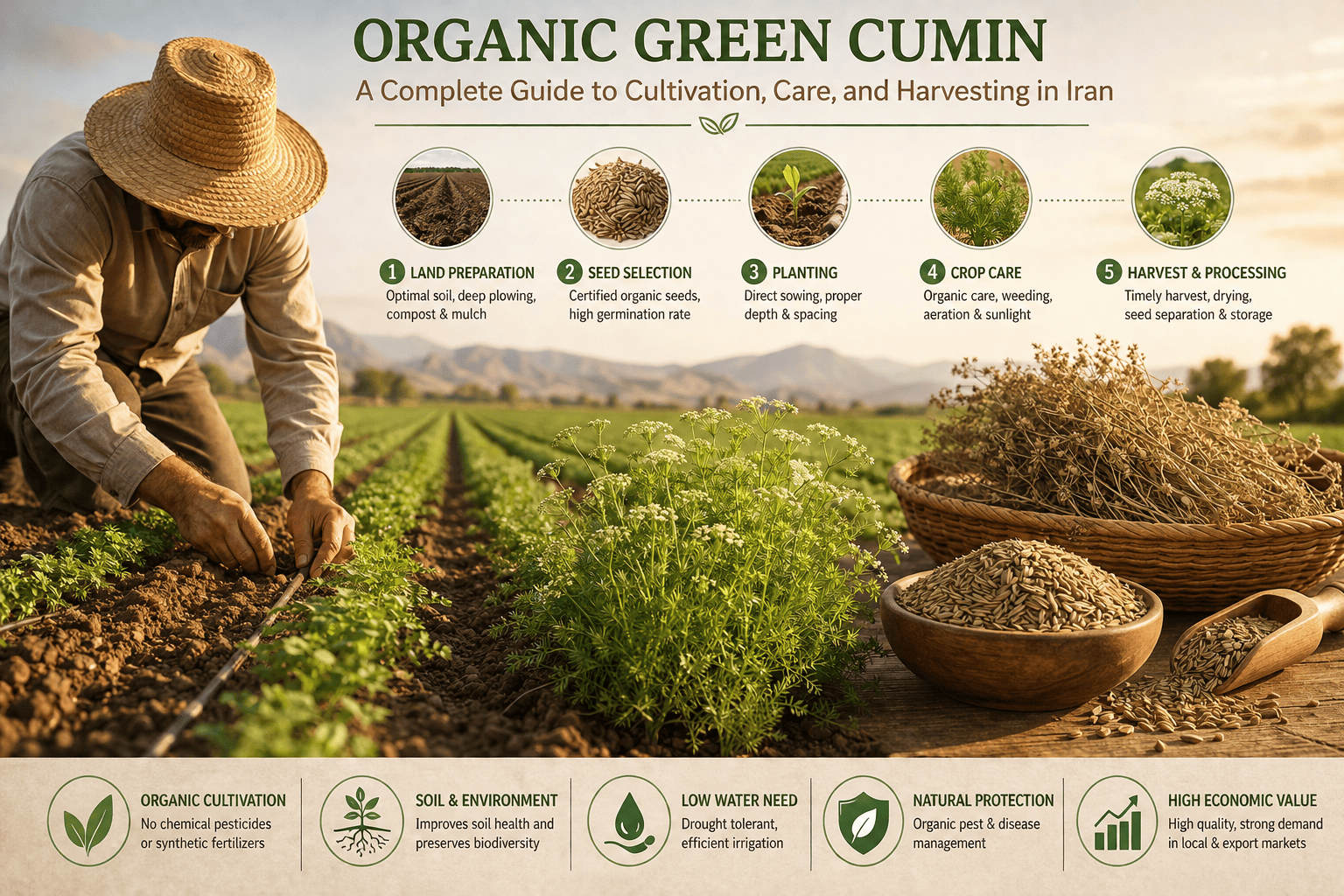
Organic green cumin cultivation is one of the most profitable organic farming activities in Iran. Organic green cumin (Cuminum cyminum) is one of Iran’s most valuable spice and medicinal plants, and due to its relative drought tolerance, rapid growth cycle, and strong demand in both domestic and international markets, it represents a profitable option for farmers.
This guide to organic green cumin cultivation provides a practical, step-by-step overview of the entire process—from land selection to harvesting—focused on organic production principles.
2. Organic Green Cumin: Overview and Economic Importance
- Green cumin is among the most widely used spices in cooking and the food industry.
- Its seeds are rich in active compounds and volatile oils with notable medicinal and health-promoting properties.
- Organic production, due to the absence of chemical pesticides and synthetic fertilizers, offers higher added value and stronger export potential.
3. Land Selection and Soil Preparation
Ideal Conditions
- Light, sandy-loam soil with good drainage and a pH between 6 and 7.5
- Full sunlight exposure and temperatures between 25–30°C
- Distance from humid areas or heavy, waterlogged soils
Soil Preparation
- Deep plowing to a depth of 20–25 cm
- Application of organic manure and compost to improve soil structure
- Use of natural mulch to reduce water evaporation and control weeds
| Preparation Stage | Practical Notes |
|---|---|
| Plowing | Plow the soil mechanically or manually and remove large stones |
| Fertilization | Apply at least 2 tons of compost per hectare |
| Mulching | Apply after seedling emergence to retain moisture |
4. Seed Selection and Key Considerations
- Use certified organic, fresh seeds with a high germination rate.
- Old or damaged seeds can reduce yield by up to 30%.
- Soaking seeds in water for 12–24 hours before planting accelerates germination.
5. Planting Time and Methods
Planting Time
- Warm and dry regions of Iran: From Azar to Esfand (late autumn to late winter)
- Colder regions: Early spring, after the risk of frost has passed
Planting Method
- Direct sowing in the main field is recommended.
- Seed depth: 1–1.5 cm
- Row spacing: 30–40 cm
- Plant spacing within rows: 10–15 cm
Tip: Using planting strips or shallow furrows helps control moisture and facilitates harvesting.
6. Crop Care and Field Management
- Weed control: Manual weeding or organic methods
- Soil aeration: Prevent soil compaction through light surface cultivation
- Light and ventilation: Full sunlight and proper air circulation reduce fungal diseases
Growth and Care Schedule
| Growth Stage | Essential Care |
|---|---|
| Germination | Moisture control and weed removal |
| Flowering | Adequate nutrition and pruning of excess foliage |
| Pre-harvest | Reduce irrigation and assess seed maturity |
7. Irrigation and Plant Nutrition
- Green cumin is a low water-demand crop; deep and controlled irrigation is sufficient.
- Irrigation interval: Every 10–14 days, depending on soil and temperature conditions
- Fertilization: Emphasis on organic fertilizers; chemical fertilizers are not recommended in organic production.
8. Pest and Disease Management Using Organic Methods
Common Pests
- Aphids
- Leaf-eating caterpillars
Common Diseases
- Powdery mildew
- Root rot
Organic Control Strategies
- Use of natural and soap-based pesticides
- Crop rotation and proper field ventilation
- Mulching to reduce surface soil moisture
9. Harvesting and Seed Processing
Harvest Time
- From early Khordad to Tir (June–July), when seeds are fully mature and moisture content is below 12%
Harvesting Method
- Cutting stems manually or using harvesting machinery
- Drying in shaded areas with good airflow
- Separating seeds from stems and sieving for higher quality
Tip: Storing seeds in cotton or jute bags in a dry environment prevents mold growth.
10. Summary: Key Takeaways for Organic Green Cumin Cultivation
- Selecting healthy, organic seeds is the first step toward high yields.
- Proper soil preparation and organic nutrition enhance seed quality.
- Effective pest control and balanced irrigation ensure a healthy and economically viable crop.
- Timely harvesting and proper drying significantly increase product value for domestic and export markets.
This structured approach to organic green cumin cultivation enables farmers to achieve high-quality production while meeting international organic standards and market expectations.