
4 Types of Cumin and Their Key Characteristics You Should Know
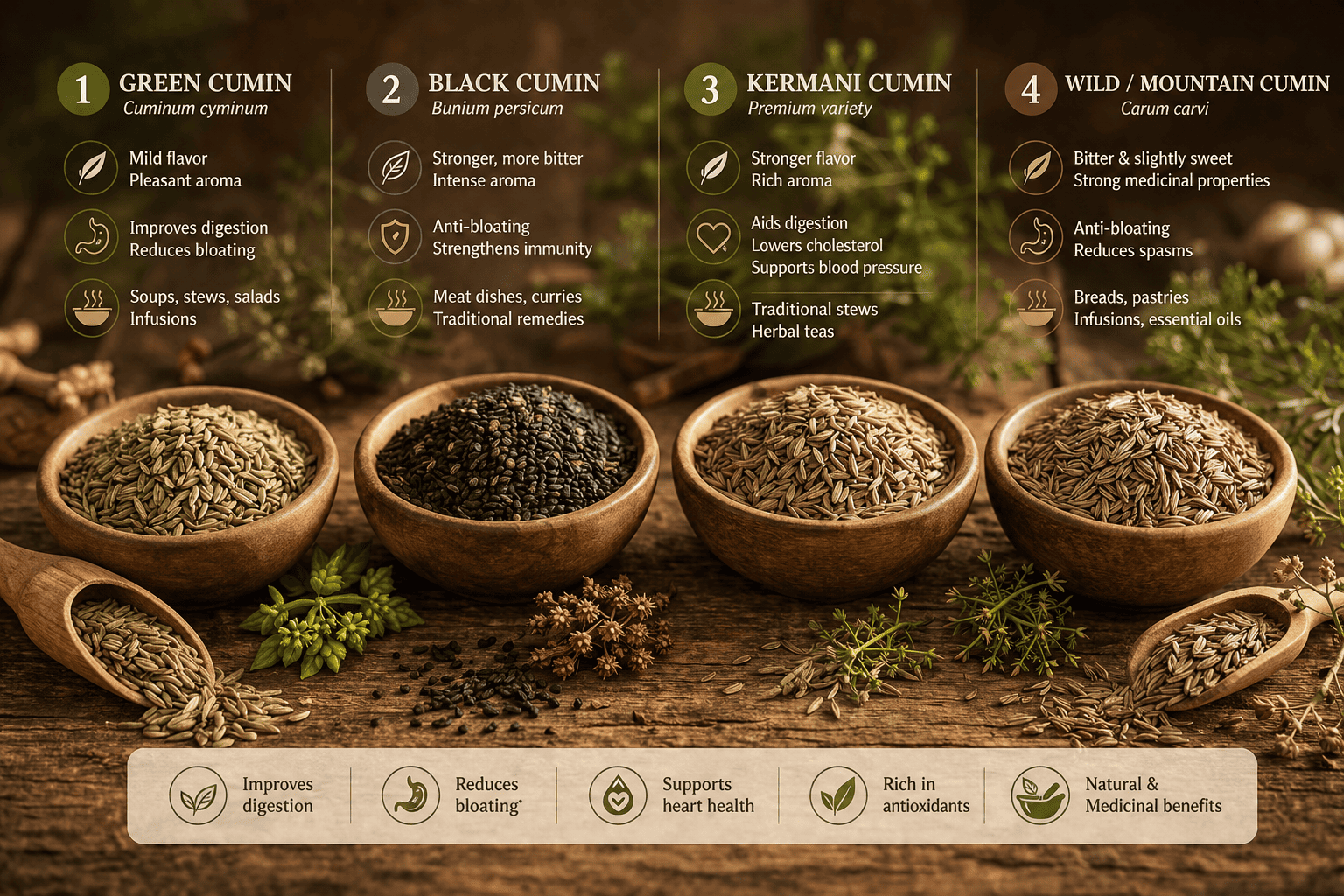
Types of cumin vary widely in flavor, color, and culinary use. Cumin is a widely used and popular spice in cooking, with several varieties, each having distinct characteristics and applications. Below is a detailed overview of the main types of cumin to help you choose the right one for your needs.
1. Green Cumin (Cuminum cyminum)
Overview:
Green cumin is the most common type of cumin in Iran and worldwide. With its mild flavor, pleasant aroma, and diverse active compounds, it is widely used in both culinary and traditional medicine. Its small green seeds have a warming nature and digestive benefits, making it popular for improving digestion and reducing bloating.
Key Features:
- Small, green seeds
- Mild flavor with a pleasant aroma
- Active compounds: cuminaldehyde, thymol, flavonoids
- Benefits: improves digestion, reduces bloating, aids weight management, helps regulate blood sugar
Applications:
- Added to soups, stews, and salads
- Infusions for digestive health
- Combined with other spices to enhance medicinal effects
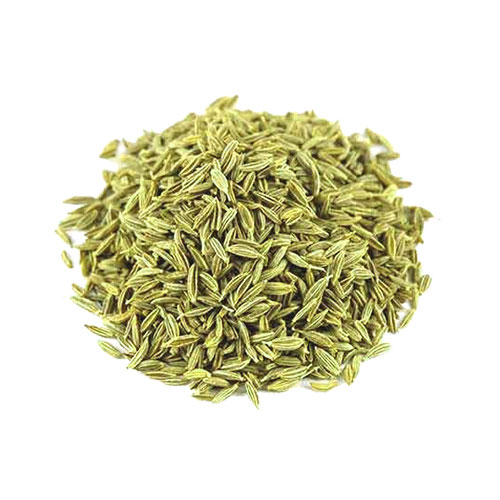
2. Black Cumin (Bunium persicum)
Overview:
Black cumin, also known as Indian cumin, has a stronger, more bitter flavor and a more intense aroma than green cumin. It is used in specific dishes, spice blends, and traditional medicine in Iran and India. Its potent medicinal properties make it effective for digestive issues and immune support.
Key Features:
- Small, black seeds
- Stronger, more bitter flavor than green cumin
- Active compounds: antioxidants and volatile oils
- Benefits: anti-bloating, stimulates the stomach, strengthens immunity
Applications:
- Added to meat dishes and curry blends
- Used in traditional remedies for indigestion
- Mixed with honey or plant oils for medicinal purposes
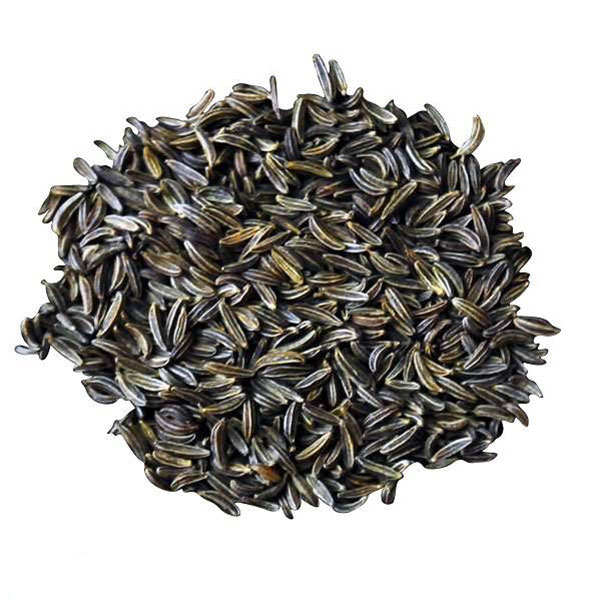
3. Kermani Cumin
Overview:
Kermani cumin is a type of green cumin with a stronger flavor and aroma than regular green cumin, primarily grown in the Kerman region. Its high-quality seeds and rich active compounds make it widely recognized in both traditional Iranian cuisine and medicinal use.
Key Features:
- Greenish-gray seeds
- Stronger flavor and aroma than standard green cumin
- Active compounds: high cuminaldehyde and special essential oils
- Benefits: aids digestion, reduces bloating, helps lower cholesterol and blood pressure
Applications:
- Used in traditional Iranian stews and dishes
- Infusions and herbal teas for better digestion
- Combined with other spices for medicinal effects
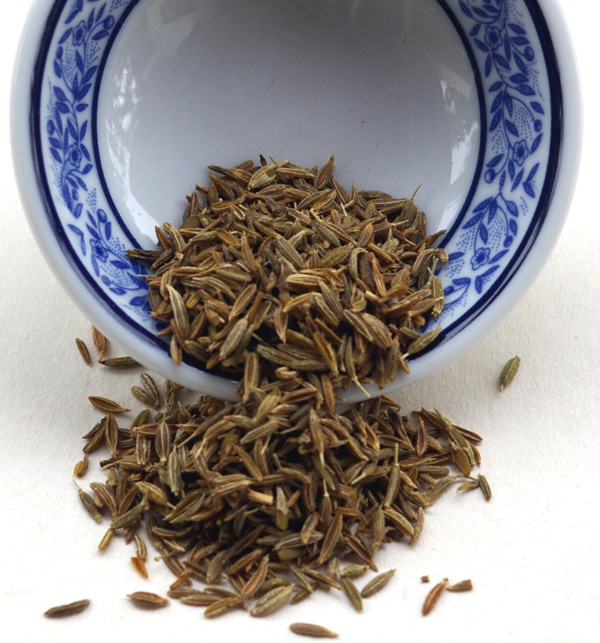
4. Wild or Mountain Cumin (Carum carvi)
Overview:
Wild or mountain cumin is resilient to natural conditions and grows in Iran’s mountainous and dry regions. Its high resistance, slightly bitter and sweet taste, and strong medicinal properties make it useful for digestive problems and essential oil production.
Key Features:
- Small, elongated light-brown seeds
- Bitter and slightly sweet taste
- Active compounds: carvone, limonene, flavonoids
- Benefits: anti-bloating, stimulates digestion, reduces stomach and intestinal spasms
Applications:
- Added to breads and pastries
- Infusions for digestive health and bloating relief
- Used in pharmaceutical applications and essential oil production
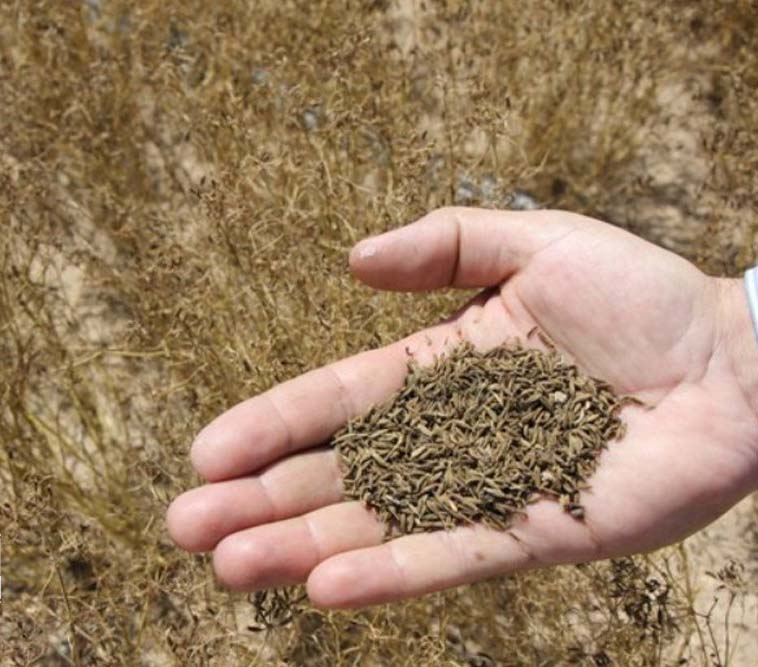
Summary and Practical Tips
- Each type of cumin has unique characteristics and uses.
- Green and Kermani cumin are ideal for daily cooking and culinary use.
- Black and wild cumin are more suitable for medicinal and traditional applications.
- Regular consumption of cumin can improve digestion, reduce bloating, and provide cardiovascular protective effects.
When comparing the types of cumin, green and Kermani cumin are best suited for everyday cooking and culinary use, while black and wild cumin are more often used in traditional medicine and specialty dishes. Regular use of any type of cumin can support digestion, reduce bloating, and offer protective benefits for heart health.
Understanding the different types of cumin and their unique characteristics helps you select the right variety for your culinary or medicinal needs, and make the most of this valuable spice.